Blog posts from the ‘Escapism’ Category

International Yoga Retreats

So, you’ve had enough of the overrun beaches, the tiresome tourist traps, the frazzled feeling that comes from fitting too much “fun” into your precious little time off. What you really want this year, you’ve decided, is not recreation, but re-creation—extending the peace, serenity, and sense of well-being you feel after yoga class. What better way to do this than by going on a yoga retreat?

yoga-4

You ask around for some leads, get on the Web and visit a few sites, make some calls, and soon you’re inundated with a stack of brochures promising unique, life-transforming yoga adventures, each one more tantalizing than the last.

But then what? Even if this is not your first yoga retreat, choosing among the vast number of offerings can be a mini challenge in itself. How do you select the experience that’s right for you?

With a bit of common sense and the right resources, it’s not as hard as it might seem. Ask yourself the right questions, and you’ll soon determine the type of yoga retreat that works for you.

You’ll want to start by looking for ways to narrow down the field of options. For instance, if you’ve already found a teacher and yoga technique you like, you’re in good shape. Even if your teacher doesn’t offer yoga vacations, she should be able to recommend retreats with other teachers of the same style.

If you don’t have a teacher or technique that you are committed to—or if you simply want to try out other styles—your range of choices is much broader. So start with location. In the United States, you’ll find yoga retreats in more than 20 states, from the serene mountains of Colorado to the woodlands of New Hampshire, from the lavish beaches of Hawaii to the mystical silence of the red rocks of Sedona, Arizona. Choose the destination, and then check out what’s available in that area.

If you have a taste for more far-reaching adventures, set your sights on India, Bali, Nepal, Peru, or New Zealand—or on vacation staples like the Caribbean Islands, Costa Rica, and Europe.

If you do decide to travel to distant shores, take special care to weigh your travel options. Some overseas yoga retreat are  packages that include everything from airline tickets to local accommodations and prearranged sightseeing trips. Others, however, leave you completely on your own.

Escape to Italy

Described by many people as one of the most beautiful places on earth. From art to food, from stunning and varied countryside Italy has so much to offer. This is the country that brought us Slow Food, devoted to the promotion of fresh products and fine traditional, cooking.480px-italy_map_with_provincessvg2

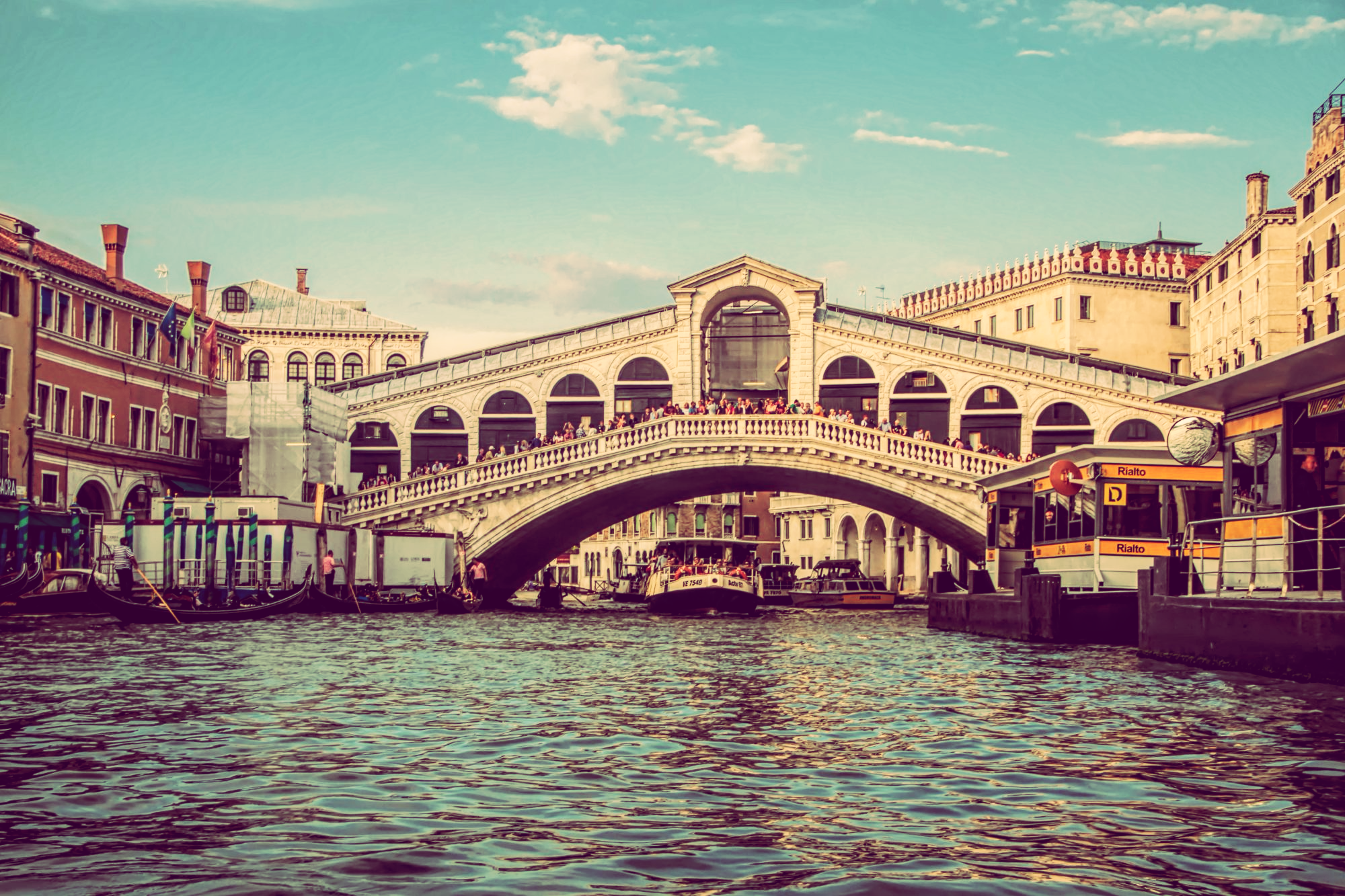
With 44 sites, Italy has more Unesco World Heritage sites than any other country on earth. Its great cities of art, like Rome, Venice and Florence, have been attracting visitors for centuries. Milan is up and coming creating one of Europe’s  biggest and most modern trade fairs and is planning a major residential development, the CityLife complex, in the heart of the city. Venice, the city of romance, is possibly the city that has, in appearance, changed least down the decades but it has recently opened a sleek new bridge over the Grand Canal.

Alongside Italy’s art treasures, you’ll find plenty to keep you busy in the countryside. You can ski in the Alps and hike the Dolomites. But as much as all of this, a trip to Italy is about lapping up the lifestyle. Taking a moment with a coffee and people watching is all you need on a bright sunny afternoon.

Escape to Peru

You just can’t escape the beauty in Peru between the desert and the lush expanse of the Amazon rainforest, it can’t help but surprise you. Peruvians honor gods both Christian and indigenous. Ancient ruins let you in on prehistoric secrets. There are stunning lakes to stare into, waves to surf, and cities to get lost in.

iquitosperuIt’s a place continuously energized by fresh influences. In Peru, you can find yourself dancing to African music, admire impressive Catholic churches and be amazed indigenous textiles.

Meanwhile, prepare to send your vision into overdrive. Peru is home to snow-capped mountains, giant sand dunes, magestic volcanoes and rocky Pacific outcroppings inhabited by grumpy sea lions.

And let’s not forget the food, a bounty of sublime concoctions made freash and fast. You’ll need weeks to savor the vast selection of delicacies: from rare strains of potato to tasty guinea pig.

Peru will not let your taste buds down.

Escape to the Philippines

Living in the Philippines will always be an strong memory to me. The one memory that stands out to me is the kindness shown by the Filipino people. So get on a plane and share some lumpia with a local.

The second-largest archipelago in the world, with over 7000 tropical islands, the Philippines is one of the great treasures of Southeast Asia. Often overlooked by travellers because of its location on the ‘wrong’ side of the South China Sea, the Philippines rewards those who go the extra distance to reach it.

philippines

And because it’s off the beaten path, the Philippines is a great place to escape the hordes who descend on other parts of Southeast Asia. First and foremost, the Philippines is a place of natural wonders – a string of coral-fringed islands strewn across a vast expanse of the western Pacific. Below sea level, the Philippines boasts some of the world’s best diving and snorkelling, including wreck divingand swimming with the whale sharks off Donsol. Above sea level, it has a fantastic landscape with wonders enough to stagger even the most jaded traveller: the Chocolate Hills of Bohol, Banaue & the Rice Terraces and fascinating reminders of the islands’ history. And if you’re after palm-fringed, white-sand beaches, try Boracay.

Of course, any traveller who has been here will tell you that it’s the people and their culture that makes the Philippines unique. Long poised at the centre of Southeast Asian trade, colonised by a succession of world powers, the Philippines is a vivid tapestry that reflects its varied cultural inheritance. And despite the poverty that afflicts much of the nation, the Filipinos themselves are among the most ebullient and easygoing people anywhere. The Philippines truly qualifies as one of the last great frontiers in Southeast Asian travel. Cross whichever ocean you need to and see for yourself.

Escape to Cambodia

There’s a beauty about Cambodia that will take a hold and never let you go. Ascend to the realm of the gods at the mother of all temples, Angkor Wat, a spectacular fusion of symbolism, symmetry and spirituality. Visit Tuol Sleng and come face to face with the Khmer Rouge. Welcome to Cambodia a country where the future is waiting to be shaped.

angkor-wat

Just as Angkor is more than its wat, so too is Cambodia more than its temples. The chaotic yet charismatic capital of Phnom Penh is a hub of political intrigue, economic vitality and intellectual debate. All too often overlooked by hit-and-run tourists ticking off Angkor on a regional tour, the revitalised city of Siem Reap is finally earning plaudits in its own right thanks to a gorgeous riverside location, a cultural renaissance, and a dining and drinking scene to rival the best in the region.

Contemporary Cambodia is the successor state to the mighty Khmer empire, which, during the Angkor period, ruled much of what is now Laos,Thailand and Vietnam. The remains of this empire can be seen at the fabled temples of Angkor, monuments unrivalled in scale and grandeur in Southeast Asia. The traveller’s first glimpse of Angkor Wat, the ultimate expression of Khmer genius, is simply staggering and is matched by only a few select spots on earth.

Tourism has brought many benefits to Cambodia: it provides opportunity and employment for a new generation of Khmers, has helped to spark a rebirth of the traditional arts, and has given the country a renewed sense of pride and optimism as it recovers from the dark decades of war and genocide. Cambodia is in a great position to benefit from the mistakes of other countries in the region and follow a sustainable road to tourism development. Can Cambodia be all things to all visitors? So far, so good, but a new era is about to begin and the beaches are the next battleground.

Yoga in Lambeth

This week we are wrapping up Yoga Wellbeing’s little bit of insight into Yoga classes in Lambeth.

Lambeth is full of surprises, from attractions, such as the London Eye, to some of Lambeth’s lesser known hidden gems such as Windmill Gardens.

yoga-vector-drawing1

The central part of the borough extends from the Oval in the north to Clapham Common and Brockwell Park in the south. It contains the borough’s largest shopping centre in Brixton as well as attractions such the Ritzy cinema.

The Yoga classes in Lambeth are as diverse as the area. Apart from the plethora of Yoga Wellbeing classes on offer. You can always try the local leisure centres such as Brixton Recreation Centre or Clapham Leisure Centre.

An insight into Sun Salutations

SS In many cultures, light has long been a symbol of consciousness. Our primary source of light is, of course, the sun. When we look at our closest star we may see a big yellow ball. But for thousands of years, the Hindus have revered the sun, which they call Surya, as both the physical and spiritual centre of our world and the creator of all life. Since everything that exists comes from the sun, Alain DaniŽlou wrote in The Myths and Gods of India (Inner Traditions, 1991), it “must contain the potentiality of all that is to be known.” For the Hindus, the sun is the “eye of the world” seeing and uniting all.

One of the means of honoring the sun is through the asana sequence Surya Namaskar (better known as Sun Salutation). The Sanskrit word namaskar comes from namas, which means “to bow to” or “to adore.” (The familiar phrase we use to close our yoga classes, namastete means “you”—also comes from this root.) The yogis taught that each of us replicates the world at large, embodying “rivers, seas, mountains, fields…stars and planets…the sun and moon” (Shiva Samhita, II.1-3). The sun, they asserted, is in reality a token of our own “inner sun.”

It might seem strange that the yogis place the seat of wisdom in the heart, which we typically associate with our emotions, and not the brain. However in yoga, the brain is actually symbolized by the moon, it reflects the sun’s light but generates none of its own. This kind of knowledge is worthwhile for dealing with day to day affairs.

There’s some disagreement over the origins of Sun Salutation. Traditionalists contend that the sequence is at least 2,500 years old (perhaps even several hundred years older) and originated during Vedic times as a ritual to the dawn, replete with mantras, offerings of flowers and rice, and libations of water. Skeptics of this dating maintain that Sun Salutation was invented by the raja of Aundh (a former state in India, now part of Maharashtra state) in the early 20th century and came to the West in the 1920s or 1930s.

However old Sun Salutation is, and whatever it may originally have looked like, lots of variations have evolved over the years.

The eight postures, in order are Tadasana (Mountain Pose), Urdhva Hastasana (Upward Salute), Uttanasana (Standing Forward Bend), Lunge, Plank pose, Chaturanga Dandasana (Four-Limbed Staff Pose), Urdhva Mukha Svanasana (Upward-Facing Dog Pose), and Adho Mukha Svanasana (Downward-Facing Dog Pose).

The transition from posture to posture is linked with either an inhalation or an exhalation. As you move through the sequence, watch your breath. Slow your pace or stop and rest entirely if your breathing becomes labored. Always breathe through your nose : Nasal breathing filters and warms incoming air and slows your breathing down. Thereby lending the sequence a meditative quality.

Launch your practice slowly with three to five rounds, gradually building up to 10 or 15. If this seems like a lot, remember that the traditional number of rounds is 108. You can pace the sequence to generate heat and cleanse the body-mind or slowly to create a moving meditation.

Whatever you do make sure you add a bit of imagination to your sequence and most of all have some fun.

Yoga helps relieve stress

namaste-on-beach

For years, yoga devotees have been telling us that bending and twisting our limbs into gravity-defying contortions is a great way to develop the perfect body. Now things have gone one step further, with a new wave of teachers claiming that yoga also offers a fast track to a beautiful mind.

Everyone from fraught mothers to stressed-out hedge-funders is catching on to the benefits of yoga therapy, a fusion of deep breathing, invigorating postures and self-help. This version of the ancient Indian practice is gaining credence within the medical community for helping with a range of issues, such as recession depression and anxiety, through to bipolar disorder and other mental-health problems.

In London, yoga therapy is now being offered at a number of NHS hospitals, while in New York, patients seeking help for depression and anxiety are as likely to find their hard-nosed psychiatrist treating them on a yoga mat as on a couch. It’s not surprising. We might all be sick of hearing about the economic climate, but it is undeniably taking its toll. We are currently in the biggest anxiety matrix the country has seen for more than 50 years. In recent months, mental-health charities have reported a surge in people seeking help for stress and depression. And after all the scare stories about the side effects of antidepressants, patients are increasingly wary of using medication to solve the problem.

Jane Kersel runs courses in Central London,  “The beginners courses are so much fuller right now because people are finding new ways to deal with anxiety and depression. Yoga encourages sufferers to reconnect the mind with the body,” she explains.

Yoga therapy to the rescue? Well, yes, actually. A new study from the Bronx Psychiatric Center in America suggests that yoga therapy can help improve negative symptoms and quality of life in patients with chronic schizophrenia. And while a bit of iyengar or ashtanga is certainly going to help ease your aching limbs, yoga therapy is specifically designed to capitalise on the positive effect it can have on the brain. Robin Monro, director of the Yoga Biomedical Trust, which promotes the development of yoga therapy in the UK, has seen a huge growth in the popularity of yoga therapy. “We get a lot of self-referrals, people who work in the City who have very stressful jobs and need tools to cope,” he says. “And, increasingly, psychiatrists and GPs are referring patients to our therapists, too.”

So how does yoga therapy differ from your usual weekly class? “You don’t need to know anything about yoga,” says Heather Mason, who runs courses designed to combat depression and anxiety. “But anyone who has some yoga knowledge might notice that the sequence of poses is very deliberately designed to move quickly between those that speed up the heartbeat and those that demand controlled breathing.

“This re-creates the same sort of physiological conditions that occur at times of emotional stress and teaches students that they can actually exert some control over what might seem an involuntary response. The idea is that having learnt this sort of control in class, students can apply it when they are feeling anxious or stressed.”

What about those who feel too vulnerable to be in a room full of yogis? Kersel recommends a one-to-one for a more personal, specialist session. “If someone is highly depressed, they’re better off having a one-to-one where you can offload and talk to the teacher in private. It’s helpful to have a sounding board, someone there to listen.” The yoga instructor Janine Thomas agrees. “Health issues can be addressed individually in a private class. For example, a student suffering from anxiety needs to learn how to lengthen the breath to slow the heart rate and calm the nervous system. They will also benefit from relaxed, restorative postures, especially forward bends, which naturally encourage a long exhale, and meditation techniques. Once they have mastered these skills on the mat, they can then apply them to stressful situations in daily life.”

Mason also believes that yoga therapy is one of the few treatments that genuinely offers a holistic cure. “If you work only on the body, you’re not addressing the thought patterns that cause stress. And if you deal only with the mental side of things, you’re ignoring the biochemical and physiological changes that emotional trauma can bring. Yoga therapy addresses both aspects of the problem.”

It’s an approach that has worked very successfully for Amanda Lyddon, a 47-year-old aromatherapist who has suffered from mental-health problems for most of her life. “My yoga is not just about what I do on my mat, it’s given me skills that I can use every day,” she says. “If I feel anxious, I know what to do to calm myself down. That’s life-changing, empowering.”

In 2000, Lyddon was diagnosed with bipolar disorder. After lithium left her feeling suicidal, she decided to look into alternative ways of managing her condition. She started practising yoga and noticed that she felt calmer as a result. “I had long periods of depression, when I couldn’t get up, couldn’t work, couldn’t look after my children, and other episodes when I would just party all the time and burn myself out,” she says. “Now things are on more of an even keel.”

Morag Jameson, 34, another yoga therapy devotee, agrees. “After years of panic attacks, becoming aware that I could control my breath was very empowering. Gradually I began to feel in control of my body, instead of feeling as if my body was controlling me. Working through a series of postures, combined with breath work, makes me feel grounded, centred and free.”

One of the key principles of yoga therapy is working with the breath, known as pranayama, which is an integral part of all types of yoga. It seems there is some logic behind your mum’s advice to stop and take a few deep breaths when you’re starting to panic. “In stressful situations, we tend to take shallow breaths from the chest rather than full breaths from the abdomen,” says Mason. “This sends a message to the brain that we are in danger and kicks off stress responses. Conversely, when you breathe from the abdomen, you’re sending a message to the brain that everything’s okay.”

Learning how to breathe properly can change the biochemistry of the brain. “More challenging yoga poses put the body under physical stress,” admits Mason. “But by making my students aware of this and encouraging them to breathe properly, I’m training the nervous system to keep both the breathing, and consequently the body’s physiological response, relaxed at times of stress.”

Lyddon believes that this approach has helped turn her life around. “Before, day-to-day life was a struggle, but now I’m beginning to feel better than I’ve ever felt in my life. I’m going back to university in October, and I honestly feel that I now have the tools I need to stave off relapses.”


Claire Coleman

Escape to Vietnam

Vietnam is a true beauty, it offers vibrant yet traditional cities, stunning beaches, incredible scenery, culture to die for and some of the best food I have ever eaten.

We arrived in Ho Chi Minh City to see the real Vietnam and found it a huge challenge to cross the street. I have never seen so many motorbikes on the street, three on a bike is the norm.

We escaped the city by heading to Ha long Bay. A surreal landscape with over 2000 limestone karsts it’s a UNESCO world heritage site and is the place to relax and take some time out.

DSCF4916

We then moved onto Hoi An, the best place in the country to spend money. With an estimated 300 to 500 tailors working in this beautiful city, this is a girl’s ideas of heaven.

In Hue you can find palaces and pagodas, tombs and temples. It’s definitely the place to go for historical, cultural and culinary stimulation.

If you get a chance go to Hanoi, the country’s capital, if you fancy it you can pay your respects in person to Uncle Ho at the Ho Chi Minh Mausoleum . Make the most of the beer costing 10p and cool off at ‘bia hoi junction’.

If you can make sure you go and trek around mountainous Sapa. All the hill tribes trek for miles to sell there wares at the local market.

Vietnam has it everything and more. Go expecting nothing, be ready for any challenge, and Vietnam will not disappoint.                                         

Escape to Argentina

Just wait till you get to Argentina. Arriving in Buenos Aires is like jumping aboard a moving train. Outside the taxi window, a blurred mosaic of apartment blocks and haphazard architecture whizzes by as you shoot along the freeway toward the centre of town. Then the real city appears, the cafés, the purple jacaranda flowers draped over the sidewalks, stylish porteños (residents of BA) walking purposefully past the newspaper stands.

DSC00531

Wall mural in Buenos Aires

Get people free-associating on the word ‘Argentina,’ and it’s quickly apparent why the country has long held travelers in awe: tango, Patagonia, beef, soccer, Tierra del Fuego, passion, Mendoza wine country.

The crackling advance of the Perito Moreno Glacier in the south, Argentina’s natural attractions was a place that you will never forget. It’s the most amazing experience when you hear the first crash of a part of the ice falling into the water.

DSCF1909

The view from our boat

The country beholds some of the Andes’ highest peaks. It’s home to massive ice fields in Patagonia, a vast, sweltering, thorn-riddled wilderness known as the Impenetrable, glacial lakes, deserts, Andean salt flats, a spectacular Lake District and more.

Travellers will also experience a country at a crossroads – an Argentina emerging from its worst economic crisis ever with a renewed, forward-looking sense of self. Cristina Kirchner, the country’s first elected female president, took office in 2007, following in the footsteps of her husband, Nestor Kirchner, who enjoyed higher approval ratings than any other president in recent years. There’s a palpable optimism in the air.

Travelers who dig beneath the tourist-office version of Argentina will find a beauty like no other. Argentina is in being reinvented. More than ever, Argentines have a lot to argue about. Spend any amount of time here, and you’ll find yourself wrapped up in the discussion too, hopefully with a couple of locals. It’s important to remember when travelling always take some time to out to sit, chat to the locals and have a hot cup of tea (mate in Argentina.)

Until next week,


Namastex


Stay in Touch

Our teachers are members of REPS
Follow us on twitter for the latest news

View our Current Timetable

View our Current Timetable
View our class timetable Our teachers are members of REPS

Professional Qualifications

Our teachers are members of REPS
They are qualified to the highest UK standard - CYQ

Yoga in the News

Yoga combats pain
Yoga helps society
Yoga and pregnancy