www.yogawellbeing.co.uk
  • Facebook
  • Twitter
  • Home
  • Yoga Classes
    • Dynamic Private Yoga Classes
    • One to One Yoga Classes
    • Group Yoga Classes
    • Kids Yoga Classes
    • Yoga for Schools
    • Corporate Yoga Classes
    • Yoga in the Park
  • Yoga Retreats
  • Blog
  • About
  • Contact

Yoga Wellbeing – Meaning of Namaste

Posted on April 18, 2010 by in Fitness, Relax, Wellbeing, yoga No Comments
Home» Fitness » Yoga Wellbeing – Meaning of Namaste

Sign up for our Monthly Newsletter

* = required field
unsubscribe from list

Categories

Archives

  • March 2012
  • February 2012
  • August 2011
  • July 2011
  • March 2011
  • February 2011
  • January 2011
  • December 2010
  • November 2010
  • October 2010
  • September 2010
  • August 2010
  • July 2010
  • June 2010
  • May 2010
  • April 2010
  • March 2010
  • February 2010
  • January 2010
  • December 2009
  • November 2009
  • October 2009
  • September 2009
  • August 2009
  • July 2009
  • June 2009
  • May 2009
  • April 2009
  • March 2009
  • February 2009
  • January 2009
  • December 2008
  • November 2008
  • October 2008

The gesture Namaste represents the belief that there is a goodness within each of us. The gesture is an acknowledgment of the soul in one by the soul in another. “Nama” means bow, “as” means I, and “te” means you. To put it simply Namaste means “I bow to you.”
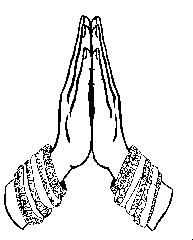
namaste

How to perform Namaste

To perform Namaste, we place the hands together at the heart charka, close the eyes, and bow the head. It can also be done by placing the hands together in front of the third eye, bowing the head, and then bringing the hands down to the heart. This is an especially deep form of respect. Although in the West the word “Namaste” is usually spoken in conjunction with the gesture, in India, it is understood that the gesture itself signifies Namaste, and therefore, it is unnecessary to say the word while bowing.

Why do we perform Namaste?

For a teacher and student, Namaste allows two individuals to come together energetically to a place of connection and timelessness, free from the bonds of ego-connection. If it is done with deep feeling in the heart and with the mind surrendered, a deep union of spirits can blossom.

Ideally, Namaste should be done at the beginning and at the end of class. Usually, it is done at the end of class because the mind is less active and the energy in the room is more peaceful. The teacher initiates Namaste as a symbol of gratitude and respect.


relaxation, Wellbeing, yoga
Logging In...

You must be logged in to post a comment.

Profile cancel

You must be logged in to post a comment.

Latest on Twitter

  • It's beautiful and bright today, Nice to see people in the parks developing their #asana practice, real #SunSalutations outdoors!
    March 22, 2012 - 7:13 am

Recent Blog Posts

  • Naked yoga
  • Love At First Bite
  • Yoga and Obesity
  • Get fit for free
  • Yoga helps beat depression

Read on your Mobile

Bookmark us

Get in touch

  • +44 (0)845 834 0895
  • Contact Us
  • yogawellbeing
    • Facebook
    • Twitter

(c) 2012 yogawellbeing.co.uk