Posts Tagged ‘yoga in london’

Yoga helps beat depression

How does yoga help?

More and more research is being used to show the benefits of yoga for depression. The majority of Yoga classes in London are promoting the benefits of reduction in stress and anxiety levels. When putting together our tailored programmes so many of our private yoga clients have asked for yoga for stress relief. So we figured we should give you a bit more of an idea of why you sometimes get that yoga high when you come out of relaxation, ready to float out of the yoga class to get your night bus home.

Researchers have found that three sessions of the yoga classes a week can help fight off depression as it boosts levels of a chemical in the brain which is essential for a calm and relaxed mind.

Scientists have found there is higher level of the amino acid GABA in those that practice yoga compared to those that more strenuous exercise. GABA promotes a healthy nervous system and brain function. Low Gaba levels can lead to depression and anxiety.

Recent research from Boston University School of Medicine, USA, monitored two groups of healthy individuals for a period of 12 weeks, half spent the three hours practicing yoga while the other half walked. There brains were scanned prior and after the experiment to measure GABA levels, there were also asked psychological questions throughout the 12 weeks.

Those who practiced yoga had increases in their mood and lower level of anxiety.

Katie Prior, of mental health charity Mind, welcomed the study.

She said: “Any kind of exercise is good for improving a person’s mood and self esteem. It makes you feel good and look good, both of which help with mental wellbeing.

“Yoga is a relaxing, low impact activity for people who don’t like the thought of walking or running.

“It can be done in the privacy of a person’s own home, or people can join a class where they can meet others – this is a great way to meet people, especially for those who may suffer from isolation and loneliness.”

So next time you feel all floaty at the end of your yoga session you know why, it’s all about the GABA levels.

Relax with Brahmari the Bee

Pranyama breathing technique – Brahmari the Bee

Pranayama cultivates a deep connection with the flow of life force (Prana) throughout your body.Brahmari means Bumble Bee and was named after the black Brahmari bee in India. This simple practice is very useful for calming the mind and releasing any tension.

Step by step guide -

1)      Sit cross-legged on the mat. If you can sit in the Padmasana Lotus Pose or Sukhasana Easy Pose that would be ideal. But if you cannot, then you may simply sit on a chair

2)     Move your arms forward and place your palms on your thighs.  Open your palms and touch the tip of your thumb to the tip of your index finger. If your mind still wanders then concentrate on your inhalation and exhalation.

3)     Raise your arms and place your palms on the sides of your head. Place your thumbs on your ears and block your ears. Place index fingers on eyelids to block put light and relax the rest of your fingers on the face. . Take a deep breath closing the mouth and make a humming sound in the back of your throat on the exhalation.

4)     Repeat for 5 rounds.

Tips

  • There should be no strain involved with the humming yoga breathing exercise. Do not force your lungs to inhale or exhale any deeper or longer than is comfortable.
  • Always breathe through your nose. It not only warms the air to your body temperature, but also helps promote deeper, longer breathing.

Yoga in London for Cyclists

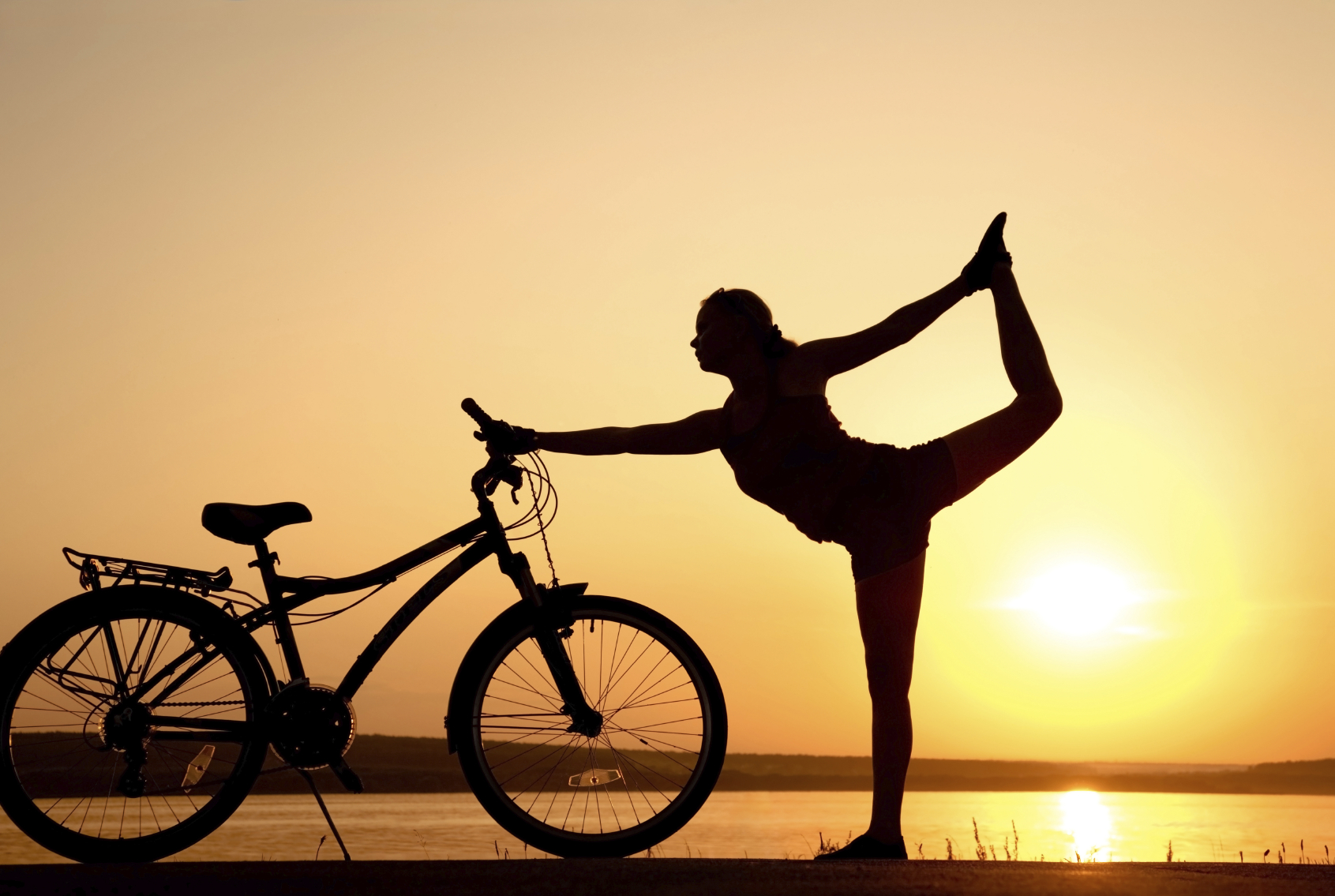
Being a keen daily cyclist and a yoga teacher, I am often wondering how many London cyclists actually stretch out their cycling muscles.

I wonder like me, if in the dark Winter months you stay in bed for a little bit longer so when you get to work, there is no chance for a stretch, and when you get home in the dark all you want to do is cook dinner or relax.

To keep the balance in the body it is important to counter stretch the cyclists position, which I fondly refer to as the prawn position – hunched forward, shoulders, abs, hips, wrists and neck short and tight. The neck and digestive areas have such important functions they do deserve a stretch out every few days. (Lance Armstrong takes yoga classes twice a week!)

So Yoga Wellbeing have put together some top 3 yoga stretches for you to incorporate into your well rounded yoga practice:

  • Downward facing dog
  • Pidgeon pose
  • Low lunge

Yoga Wellbeing would love to hear from you so give the stretches a go and let us know if they helped you stretch into your super speedy pedalling.

Let your mind wander

Harvard University study has shown that most people spend 4think-positive6.9% of their wakinghours in a state of distraction. The study found that people were thinking of anything other than what was happening around them for nearly half their time awake.

The study utilised the technology of an iPhone web app to collect data from volunteers as they spent their days. The 250,000 points of data covered feelings, thoughts and actions of the participants. The app randomly contacted the 2,250 participants to ask what they were currently doing and how happy they were. They were also asked if they were actually thinking about the activity they were engaged in.

This fascinating study was created by Daniel T. Gilbert and Matthew A. Killingsworth both of whom are psychologists at Harvard University. In their paper which was published in the Science journal, they wrote that “A human mind is a wandering mind, and a wandering mind is an unhappy mind,” adding that “The ability to think about what is not happening is a cognitive achievement that comes at an emotional cost.”

They also found that people’s brains seem to have a default pattern of mind wandering spending time thinking about past events, possible future events and total imaginations, all of which is unique to humans; animals only think about what is happening around them. Killingsworth explained that “Mind-wandering appears ubiquitous across all activities,” and that “This study shows that our mental lives are pervaded, to a remarkable degree, by the non-present.”

An interesting statistic emerged revealing that only 4.6% of someone’s happiness was due to their current activity, whereas 10.8% of their happiness was due to mind wandering.

To sum up, Killingsworth said, “Mind-wandering is an excellent predictor of people’s happiness,” adding that “In fact, how often our minds leave the present and where they tend to go is a better predictor of our happiness than the activities in which we are engaged.”

Relieve your cold

Yoga Wellbeing classes are filling up with yogis who are using their regular yoga practice to work against all the colds and flus going around. You can’t always keep the colds of winter from stuffing up your head and slowing down your body. Before you know it, you may be wondering if you should attempt your yoga practice or retreat to bed. Here’s a little bit of  Yoga Wellbeing inspiration;

yogawellbeing-winter-practice

TREAT YOURSELF If you feel you need to take something for your symptoms, try to avoid antibiotics, and even over-the-counter cold remedies aren’t very practical, since many contain five drugs when all you need is one or two. Perhaps you could try individual remedies, like lozenges for a sore throat. For nasal congestion, add a few drops of eucalyptus oil to boiling water and inhale the vapors. Although it’s still not clear how effective echinacea, zinc lozenges, vitamin C, and homeopathic preparations can be, you can still try them, since they are all generally very safe and could be the remedy you need.

LISTEN CLOSE Check in with your body before practice. If you’re wiped out, you could make things worse by pushing through your normal routine, so try a gentle or restorative practice instead and skip strong breathing techniques. Once your energy improves, you can gradually return to a more vigorous practice even if you still have a cough or your nose is stuffy. If you feel worse after practicing, it’s a sign that you’ve probably done too much. Take it easy and be kind to yourself.

TRY OUT SOME POSITIVE VIBRATIONS Vibrations from humming have been shown to open the sinuses and help get rid of phelgm, which can relieve pressure and may even help stave off a bacterial infection of the sinuses. Try chanting Om, or, for nasal congestion, experiment with the pranayama practice of Bhramari: Press your lips together and make the sound of a buzzing bee.

STAY UPRIGHT If your head is stuffed up or you’re feeling tired, avoid inversions like Headstand and Handstand. Even Shoulderstand can worsen nasal congestion and head pressure.

SUPPORT YOURSELF Even restful poses like Savasana (Corpse Pose) aren’t easy when you’re congested, so instead of lying flat, support your back on a bolster running lengthwise from your lower spine to your head, with a folded blanket under the head and neck if needed. This makes breathing easier, and it’s more energizing.

London Yoga Trends

Yoga is designed to help your mind and your body, and many of the new trends emerging around London some yogis are finding a little confusing. Whether you practice yoga for the physical aspect, peace of mind or just because you love it. Yoga Wellbeing has been busy putting together a list of the top ten yoga trends in London. So cast your eyes on these quirky yogic ideas and let us know your thoughts;

yoga_classes_in_london

  1. Doga: Think your dog would like to do yoga? Yeah, probably not. That hasn’t stopped pet owners from trying, however, as this dog yoga trend (or Doga) has spread from coast to coast. While it’s all well and good to get your dog a workout, it would probably much rather prefer a run in the park to trying to perfect its downward dog.
  2. Yoga Dinner: Nothing goes better with working out than some hors d’oeuvres, right? This trend pairs intense yoga training with a post-workout dinner. If you’re the sweaty type or just don’t feel like eating a gourmet meal in your workout clothes, this trend is definitely not for you. While it does get away from the tradition of yoga, you won’t have to loosen your belt or unzip your trousers courtesy of your stretchy yoga attire.
  3. Mobile Yoga: As if rollerblades didn’t already make you look silly enough, this yoga trend asks practitioners to strap on some skates before starting up their yoga routine. While it might be a good workout, it certainly takes away from the relaxation factor in yoga, as you’ll not only have to concentrate on performing your asanas correctly, but also not falling on your rear end.
  4. Funeral Home Yoga: While the dead are pretty much as peaceful and calm as you can get, most people would balk at performing yoga in a funeral home or a cemetery. Yet both of these places are becoming common destinations for yoga studios. If you’d like to meditate on death and your own mortality while doing yoga, then it might work for you. If you prefer something more upbeat, stick with traditional yoga practice.
  5. Yoga Competitions: Yoga is designed to be personal, working with your body and your mind to achieve a sort of harmony. In Western society, however, that drive to achieve balance and harmony often becomes a drive to achieve it better than everyone else in your yoga class. Competitive yoga is a growing phenomenon, taking the practice of yoga and turning into a contest.
  6. Yoga Dating: This growing trend replaces the coffee or drink date with one centered around yoga. While it’s great to meet people who share your interests, it doesn’t seem conducive to conversation or improving your yoga.
  7. Naked Yoga: Many people can’t go on enough about how great naked yoga is and how it gets you in touch with your real being, without all those pesky clothes to get in the way. While the shedding of the often distracting status symbols is great, the reality is that with nudity comes sex, even if instructors adamantly claim their courses are non-sexual. The fact that many of these courses require students to pair up only further reinforces that there’s an element of sexuality to them. Why is this a bad thing? Because the quality of the yoga is often diminished by the sensuality. There are already enough things to distract you when doing yoga, naked yoga just adds another.
  8. Room Service Yoga: You can order up a massage, a bloody mary and get your dry cleaning done through room service, why not call up a yogi too? Many hotels, resorts and other hospitality facilities now offer yoga on-site either through classes or on-demand. While having access to yoga no matter where you go is great, why pay for something you can do on your own for free? It simply further commercializes the already over-commercialized practice of yoga.
  9. Ski Yoga: You know what hurtling down the mountain at dangerous speeds around trees and rocks needs to make it better? Doing it while in tree pose! Because, of course, everything is made better by adding yoga to it, ski resorts around the nation are now offering a variety of ski yoga classes visitors can take. While stretching out before skiing is a good idea so many places are combining it with everything from skiing to kayaking that it’s hard to concentrate on just the yoga.
  10. Aqua Yoga: Doing yoga outside of the water is great, why not bring it into a pool with you? Doing yoga in water can reduce some of the stress it puts on joints, but it also limits the types of movements you can do. There’s nothing really wrong with aqua yoga per se, it just doesn’t seem particularly necessary and follows a trend of bringing just about every land-based kind of working out into the water.

Yoga and Diabetes

Buddha Statue

Yoga has even been known to cure various serious ailments and diseases including heart disease, muscle and joint debilitation, depression and many, many more ailments. We have found more and more clients are being faced with diabetes. It has been seen to be resolved with a regular yoga practice. Diabetes or Diabetes Mellitus is a chronic polygenic disease where the glucose level in the blood is abnormally high. It is a type of metabolic disorder characterized by the body’s inability regulate and produce insulin. The main function of insulin is converting sugar, starches or other food items into energy. When the body stops producing insulin, the sugar circulation in blood increases unchecked, which leads to serious disorders of the nervous system, the vascular system, the circulatory system, obesity, even loss of limbs. Diabetes is a growing world-wide epidemic that even the most advanced medical doctors are continuously losing the battle against. Yoga and a balanced diet paired together have been seen to show marked steps towards curing diabetes and balancing blood sugar. Regular practice of yoga also reduces the chances of the onset of diabetes and keeps it in control by changing lifestyle patterns.

There are various yoga poses which can be effective in warding off diabetes. Sun salutation or Surya Namaskar is a very powerful and helpful yoga exercise for people suffering from diabetes. This exercise tends to improve the blood circulation throughout the body and hence a better level of insulin administration throughout the body. After becoming more familiar with Sun Salutations, one can practice other yoga asanas. Pranayama or the breathing techniques are also very good for controlling and purifying the blood. In addition, practicing meditation can also be helpful in the treatment of diabetes. Regular meditation has actually been known to have a regulative effect on sugar levels.

Your Yoga Practice

sneeze

As hard as you try, you can’t always keep the colds and flus of Autumn from stuffing up your head and slowing down your body. Before you know it, you’re wondering if you should give up and go to bed. Here’s a couple of ideas to keep the colds at bay.

LISTEN CLOSE – Check in with your body before practice. If you’re wiped out, you could make things worse by pushing through your normal routine, so try a gentle or restorative practice instead and skip strong breathing techniques. Once your energy improves, you can gradually return to a more vigorous practice even if you still have a cough or your nose is stuffy. If you feel worse after practicing, it’s a sign that you’ve probably done too much.

TREAT YOURSELF If you feel you need to take something for your symptoms, avoid antibiotics; they are worthless for colds, and even over-the-counter cold remedies aren’t very practical, since many contain five drugs when all you need is one or two. It makes more sense to take individual remedies, like slippery elm lozenges for a sore throat or acetaminophen for pain. For nasal congestion, add a few drops of eucalyptus oil to boiling water and inhale the vapors. Although it’s still not clear how effective echinacea, zinc lozenges, vitamin C, and homeopathic preparations can be, you can still try them, since they are all generally very safe.

CLEAR YOUR HEAD A stuffy nose, while not serious, can really put a crimp in your practice, especially if you do a lot of Ujjayi Pranayama (Victorious Breath). To unstuff yourself, use jala neti, a yogic nasal cleansing technique: Put a quarter teaspoon of noniodized salt and eight ounces of warm water in a neti pot. Standing over a sink, tip your head to one side and insert the spout into the upper nostril, allowing the water to flow into your nose and drain from the other nostril. Repeat on the other side. You can try this several times a day if you’ve got a cold. Jala neti can be helpful right before pranayama or meditation practice, or even asana.

SOUND OUT YOUR SINUSES Vibrations from humming have been shown to open the sinuses and let phlegm drain, which can relieve pressure and may even help stave off a bacterial infection of the sinuses.

Above all be kind to yourself.


Yoga in London

yoga-in-london

This is a message from a London Yogi who was struggling at first with the sterotypes related to Western yoga.

Four years ago I thought yoga was for girls. I play football, end of story. Despite this, for various reasons not worth sharing now, I started to go along to yoga classes to support my partner. Six months later I was still going, and really enjoying it. Nonetheless my practice at this stage was a little sporadic, and yoga was languishing a long way behind football in my set of priorities.

There are times (and I don’t say this lightly) when I’d rather do yoga than play football. Let me explain the attraction. Firstly the physical side of things. Football is great because it clears my mind, gives me an outlet for my physical energies, and leaves me mellow yet somewhat elated. Yoga also has that effect on me. It gives me the high.

I also have a sense of progress. I am no natural yogi; I am bony and angular and not naturally flexible. When I started I had trouble sitting cross-legged. Yet now I can sit with cross legs, I can touch my toes with ease (even put my palms on the ground), I can stay in a head stand for a couple of minutes… in short, there are a multitude of postures that were once beyond me and now are quite achievable.

It has benefited my health. I used to suffer from chronic lower back pain but yoga has now got that under control. (As it happens I have had back troubles again recently, of a different sort, but this seems unrelated.) I have noticed a dramatic increase in lung capacity (all the positions in yoga are coordinated with the breath, so one learns to regulate one’s breathing and to breath more deeply). The other day I swam a kilometre for the first time in my life. This was with almost no swimming practice, but lots of yoga.

I have much more control over different parts of my body. Whereas playing football benefits only a subset of the muscles in the body, yoga does the lot. Before I did yoga there were whole areas of my body that were weak and unutilised – that I didn’t know were there. Now I have awareness of these areas, and can use them (for instance when lifting heavy things, instead of busting my back like I used to).

Yoga isn’t just physical though. It also challenges and benefits my mental/ spiritual side. Firstly this takes place through regulating the breath. I have learned to breath deeply and slowly, thereby lowering the heart rate, and naturally calming the mind. This aids concentration and eases stress: when we’re stressed our breathing tends towards shallowness and hyperventilation; by dealing with the physical symptoms of stress, some of the mental symptoms are also relieved.

Yoga also builds awareness of the present moment – what the Buddhists would call “mindfulness”. Yoga requires awareness of one’s whole body and full involvement in the here and now. Just as when I play football I am entirely focussed on the game without thought or worry of the past or future, so too in yoga I am freed of these distractions. Yoga seems somehow more beneficial though, because my mental state remains calm. (I’m not calm when I play football!)

Yoga is refreshingly non-competitive. While I admire very talented yoga practitioners (see video for an extreme example), a good session of yoga for me can be much more modest yet still push my physical and mental boundaries, and bring just as much benefit. With this in mind I’d recommend yoga to anyone, no matter what their state of physical health, for they will surely benefit.

Yoga for Children in London

yoga-for-kids-in-london

Yoga for Children Antidote to Stressed Families

Yoga for Children is a wonderful antidote to the hectic lives that our children lead. Yoga can be relaxing, stimulating, and promotes well being. It provides closely controlled exercise and is enormous fun for children at the same time.

A number of Yoga for Children programmes have been created by Yoga teachers to introduce the benefits of yoga and relaxation at an early age in a playful, simple and fun way. The combination of special yoga moves, breathing exercises and relaxations will energize, strengthen, loosen and balance little bodies, while helping to calm and control and relax little minds.

Kids yoga is a wonderful opportunity for the child to learn life skills that can be implemented into their daily routine. Whether it’s breathing and relaxation techniques that will help them, focus, concentrate or be calm; or postures that will help their endurance, flexibility, balance and coordination these are all very naturally a strong part of yoga.

Yoga for children is most successful if the children are encouraged to use their imagination. A dynamic, creative and stimulating approach grabs the children\’s attention.

Yoga for children is practiced in the United Kingdom. It is not new to Britain, with after-school clubs and classes gaining popularity in recent years as parents realize its wide-ranging benefits. What is new to the UK, however, is the method of Research on Yoga in Education (RYE), an international non-profit making organization which blends the standard school curriculum with exercises on concentration, attention and relaxation, drawn mainly from traditional yoga.


Stay in Touch

Our teachers are members of REPS
Follow us on twitter for the latest news

View our Current Timetable

View our Current Timetable
View our class timetable Our teachers are members of REPS

Professional Qualifications

Our teachers are members of REPS
They are qualified to the highest UK standard - CYQ

Yoga in the News

Yoga combats pain
Yoga helps society
Yoga and pregnancy