Blog posts from the ‘Yoga in schools’ Category

Eat, Pray Love

eatpray-love

In Eat Pray Love, Julia Roberts plays Liz Gilbert, a woman who travels around the world for a year to find herself, having realising that the life she had been living was not the one she had planned. Her emotional and spiritual breakdown is convincingly played by Roberts. In reality Liz Gilbert was an accomplished journalist and published author, living what many would consider to be an enviable life in New York. I did wonder how sympathetic I would be towards the main character’s crisis, particularly when played by somebody as beautiful and successful as Julia Roberts. To her immense credit, I was convinced by her portrayal of Liz’s inner turmoil, although I’m not sure that I totally warmed towards the film character. Maybe this was because her personality had become fractured and fragile as a result of her depression and summoning up the energy to simply function was all she could muster.

Eat Pray Love is charming and inspiring. The performances are great and the cinematography is lovely. The fact that Liz is now a practicing yoga teacher and is living the life she wants to lead is great. I enjoyed following her on her journey to find balance and peace. Namaste.

Yoga in London Schools

kids-yoga-in-london

Yoga in Schools

Included with an educational formula, yoga for youngsters helps the young ones handle with stress in the best of ways. If in India the teaching of yoga usually begins at young ages as part of the lifestyle, in the western society it truly is the decision of parents who desire such a kind of activity for their siblings. The good part is the important advantage of yoga for young ones is that they develop self-awareness and spirituality more quickly and better than a grown-up. Yoga for kids teaches body and mind control and in many cases it helps create very good behavioral patterns.

As of the moment, some schools involve yoga for kids as an additional curricular activities, but most of the time classes are independent. Exactly like dance and karate classes, yoga for kids are easily squeezed that is in a child’s daily program. Therapeutic studies show that yoga has had very good results in the case of children who are affected from hyperactivity or attention deficit. That’s why with these disorders, the children constantly crave movement, yoga helps with the channeling of a lot of these impulses in non-destructive ways. Self-confidence, balance and calm are the great outcomes to result from yoga-for-kids programs.

How can Yoga for Kids help?

In addition, with yoga, kids learn easy methods to conquer victories over mind and body and additionally how to peacefully cooperate. Any anatomical flexibility specific to young age makes postures to a great extend simpler to perform; adults on the other hand need to work an awful lot more to achieve enough flexibility to practice yoga. The more tricky part with yoga for young ones is the relaxation technique, since almost all children find it almost impossible to keep their eyes shut, not to mention stand still when doing so. That’s why, visualization remains the main way of serving young and grown up yoga students get into the relaxed state of mind.

The posture names in yoga for kids classes allow children to learn them more easily. Thus, instead of performing asanas they will make a bridge, a mountain, a cat, a dog or a cobra, to name only a few. Moreover, trainers never push the practice of yoga for kids to the limit of pain, as the activity wouldn’t be that attractive with an extra pressure.

Yoga Benefits ADHD

Studies have proven that people of all ages need at least sixty minutes a day of exercise for better health. It is essential, especially for ADHD children, to get exercise to run off their high amounts of energy. Without it, they cannot focus or process what they have learned. According to the article, “The Active Classroom”, no recess for ADHD kids can lead to problems in the classroom.

kidsyoga-1How Yoga Benefits ADHD

Positively, yoga can assist with the high energy by calming kids down. An estimated 2.5 children between the ages of 4 and 17 take a prescribed drug to treat the neurological disorder. With ever increasing concerns of long-term problems from these drugs, people are looking for a less extreme way to help cope with the symptoms. Researchers from Australia and Germany have found that boys ages 8 to 13 who practiced yoga at least once a week for five months were found to be less hyperactive. Yoga’s forward bends, a pose that helps deepen and lengthen breath, is said to aid well in helping ADHD students concentrate.

Yoga, a 5000 year-old practice, has been known to calm children, reduce obesity, reduce discipline problems, decrease anger and panic, enhance imagination and academic performance. Additionally, common physical ailments such as pains of the stomach, back, and head, constipation, sinus issues, and colds have all been reduced by practicing yoga.

Children and Yoga Practice

For children who choose to practice yoga, 4 to 6 times a week is preferred. However, only once a week will reap the benefits. Class time only need be about 15 minutes for children under 5. Time can be increased to 25 minutes for ages 7 to 9 years. It is recommended that children younger than 5 will need to be instructed in a class by themselves. The 5-11 age groups can be taught together. Children older than 11 might want a single gender class. The average class number should be 6-10 students.

A children’s yoga class will be taught different than an adult class. Where adults focus on the health benefits, children are focused on play. Children will be taught the poses set in a story, using songs and games. These activities truly help ADHD children by having them focus on breathing techniques. The breathing techniques will help them to relax, learn self-awareness, and control.

Breathing Techniques for ADHD Kids

According to ADDitude magazine, “the nervous system has two parts. The stress response and the recharge response.” Both responses are underactive in a child with ADHD. As with most things in life, there needs to be a balance between the two. Coherent breathing, a phrase coined by yoga specialist Stephen Elliott, puts the heart, lungs, and brain in rhythm.

Elliott suggests practicing 10-20 minutes a day on the breathing exercises until it becomes automatic. 5 to 6 breaths a minute is preferred to help kids calm down. It is suggested that children have something positive to visualize, such a favorite color or place.

Many children with ADHD often cannot help their inattention, lack of focus or impulsivity. Exercise, in the form of the playground or with yoga, can help them improve academically. Studies show that even just 30 minutes 3 to 5 times a week can be advantageous. They are able to deal easier with classwork because they can focus better and are less frustrated.

How can yoga help your child


yoga_for_children
Children experience many of the same physical benefits adults do from practicing yoga.

The benefits of yoga for kids

Yoga for kids  enhances self-awareness. Children who practice yoga learn early on to tune into their bodies. Self esteem is bolstered as the children gain control over their bodies and minds.

Yoga for kids enhances imagination and empathy. Children are asked to strike poses from nature. They might assume the pose of a snake, or a tree, or a dog. Then they are asked to imagine what it would be like to be those life forms. In this way, children learn early on to connect with all the life on the planet and realize that similarities far outweigh differences.

Yoga teaches children to have fun and move their bodies in a con-competitive environment. Yoga isn’t about being right or wrong, or being best or worst. It is about bringing unity to one’s own life. Children can work together to help each other reach this goal.

Yoga for kids teaches self-discipline. As part of the practice of yoga, kids need to slow down, hold certain postures, breathe or think in a certain way. Yoga encourages children to master themselves rather than wait for an adult to control them.

Yoga for kids can also be a way to strengthen families. Yoga is an exercise that parents and children and even grandparents can practice and talk about together. As children participate in yoga with their families, they feel closer to their loved ones.

Through practicing yoga, children can learn ways to relax and get control of stress in their lives. A child worried about a test, for instance, might use the meditation or breathing techniques of yoga to help her calm down and focus.

By teaching self awareness, self control, and concentration, yoga can also help to manage children who have been diagnosed with ADHD – attention deficit and hyperactivity disorder. Yoga has also been used with some success to help children with Down syndrome, cerebral palsy, and autism. Yoga for kids has also been used to help kids with cancer cope with their diagnosis and with scary medical procedures.

Overall, children seem to derive great benefits from doing yoga. The next time you put on the DVD for your own workout, think about including your little one in the fun. Chances are you’ll be glad you did.

Yoga Treatment can help with Autism

Most autistic children are more familiar with being told to sit still than to take tree pose. But due to a new yoga-based treatment called Integrated Movement Therapy (IMT), 35 kids in the Seattle, Washington, area have dramatically improved their balance and sociability as well as their communication and problem-solving skills-results that are often not easily attained through conventional therapies. When touch or movement are combined with verbal exercises, kids generally experienced more spontaneous speech and improved mood.

How yoga classes might be structured to benefit children

Therapy blending speech-language exercises, self-esteem building, self-calming practices, and yoga postures might address the characteristics associated with autism disorders. Although autism is a complex condition that can vary from child to child, there are a few common threads.  By merging the principles of yoga with conventional behavioral, mental, and verbal therapies, IMT encourages a child’s physical, emotional, and social growth. yoga_kids

The classes range from formal pranayama or asana practice to simple game playing. For example, a class of 5- to 7-year-olds might begin with breathwork and then move into a game of Red Rover, in which each child runs to the front of the room to perform his or her assigned yoga pose when called. By learning that self-calming techniques can be an adjunct to activity, autistic children discover that being asked to quiet down doesn’t always have to be punitive.

Older students learn coping skills through performing through yoga stories. The game begins with each student picking a handful of cards printed with specific poses. One at a time, each student must tell a story using his or her cards while performing the poses for the group. Probably the most remarkable changes have been in terms of social interaction and how the children feel about themselves. If you have have a child with autism who has experienced a yoga class then we would love to hear your story.

Yoga can help children with Autism

By aiding in stress reduction, reducing anxiety, increasing body awareness, strength, and flexibility and increasing self-regulation. Persons with Autism may particularly benefit from yoga in that heightened anxiety, poor motor coordination and strength and weak self-regulation are three areas in which most persons with autistic spectrum disorders struggle and for which there are few other solutions. Yoga poses and breathing techniques could prove to be very helpful interventions for increasing the quality of life for children and adolescents with ASDs. By practicing a simple warm up, strengthening, calming, and tension-releasing exercises that are suitable for reducing coping mechanisms such as hand-flapping, and increasing muscle tone, muscle strength and body awareness. They also offer a range of short and long sequences that can be tailored to fit the needs of the individual child.

children-yoga“I have a grandson with Asperger Syndrome who has been doing yoga for about a year. He does especially well with a modified Tree Pose and the modified Spinal Twist. Both poses are relaxing and keep his arms occupied. The Tree is wonderful for strengthening his muscles and helping his balance. The Spinal Twist is a very gentle twist that is good for his upper torso. These yoga poses have helped him release energy in a positive way.”
Judy Waldman, Former Primary School Teacher

The incidence of diagnosed autism has risen sharply over the past 20 years; some estimates put the rate as high as one in 500 children. Yet I have found very few articles based on yogic training and autistic children. One program in Seattle maintained positive results with a yoga-based treatment called Integrated Movement Therapy; the children reportedly improved their balance and sociability as well as their communication.

Does anyone know anybody who has worked with yoga and autism? Or has anyone got any reading recommendations?


Yoga for children

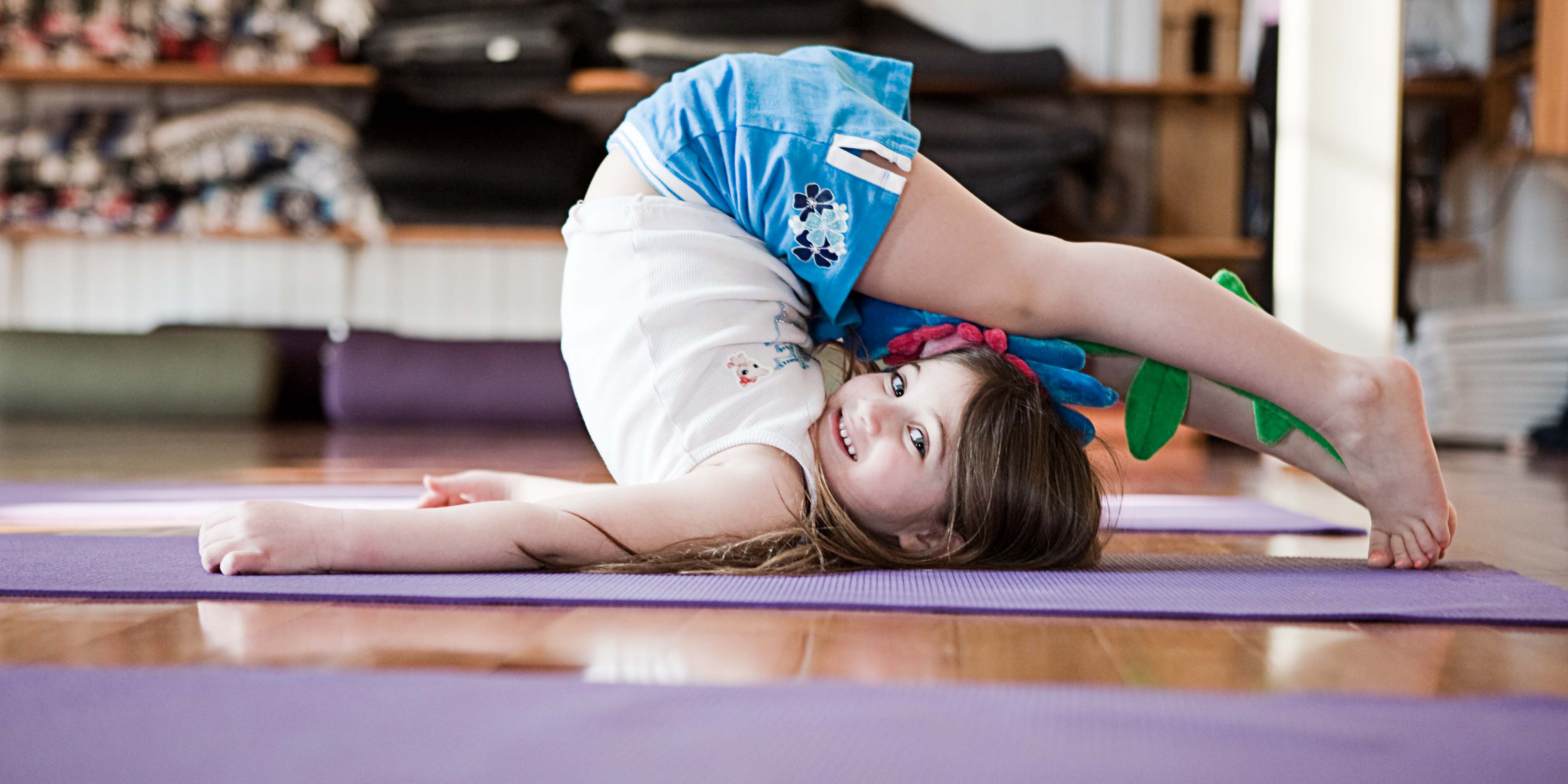
Many adults practice yoga not only for the ways that it benefits the body, but also for its well proven effectiveness in improving mental clarity and emotional balance, and now growing numbers of children are discovering that this type of exercise can be good for them, as well. Some schools have begun to incorporate “yoga for kids” classes into their curriculum, recognizing the positive effects that yoga can have on students.yoga_for_kids

Benefits of Yoga for Children

The benefits of yoga are far-reaching, with participants in yoga classes for children experiencing all sorts of physical and emotional changes. Yoga is calming and is a wonderful stress reducer, which can be quite helpful for today’s generation of over-scheduled, high stress kids. Unlike a generation ago, modern kids are often kept busy with a number of organised activities, allowing them very little time to simply unwind and relax, but yoga helps them to do just that. While all kids can benefit from yoga, those with hyperactivity or anxiety conditions may be especially well suited to yoga classes.

In addition to the emotional benefits of yoga, kids who enrol in yoga for children classes reap a number of physical rewards. Increased strength, flexibility, better balance, improved coordination, and heightened body confidence are common for those who practice yoga regularly, and with continued practice, many people notice an enhanced spiritual connection to the exercise.

As kids get older and are better able to take direction, parents may want to consider enrolling them in classes specifically labelled “yoga for children” or “yoga for kids.” Children are not simply small adults, so they need to have instructors who are educated in paediatric physiology and have the personality to offer patient, positive, and careful direction.

Incorporating Yoga into a School Curriculum

When presented with options, many parents would choose to include yoga as part of the physical education programmes at their children’s schools. Some schools haven’t made changes to their curriculum in years (in some cases, it may even have been decades!), but today’s forward-thinking educators are often enthusiastic about offering children a well-rounded educational experience. Interested parents may wish to contact their children’s teachers about incorporating yoga instruction into their kids’ school days.

Yoga is an age old practice, but has enjoyed a resurgence of interest in recent years. Today’s busy lifestyles often require that people of all ages (kids included) actively seek healthy ways to relax and release stress. Yoga is an ideal choice for many, with benefits that are far reaching. Additionally, yoga teaches a respect for the body and spirit, encouraging participants to look at their overall health and lifestyle choices to see that they are making sound decisions regarding their nutrition, environment, and relationships. Such thoughtful introspection is an especially good habit to install in childhood, when many lifelong attitudes are being developed.

Yoga in Schools

Those are the calming whispers of Miss Carr, teacher at Quarry Brae Primary and newly trained yoga instructor, who has a class of 10 and 11-year-olds huddled in front of her with their legs crossed, eyes closed and thumbs and index fingers forming the yoga Mudra. yoga_in_schools

The lights are dimmed, a lavender candle is burning nearby and, with a Glaswegian twang, the children chant “Ommmm”.

It is not what you might expect from a classroom in Glasgow’s east end.

Quarry Brae is in Parkhead, a stone’s throw from Celtic football ground, and by the head teacher Sara Adam’s own admission is a deprived area that is finally getting much-needed investment.

In October 2009 the area of Parkhead West and Barrowfield was identified by the Scottish government as the most deprived in Scotland.

Things are on the up though, and rusty swings and litter-strewn parks sit next to new housing developments.

For Quarry Brae Primary teacher Ms Carr and head teacher Mrs Adam, yoga is bringing a calming influence to the children and helping to get them in a mood to learn.

“Perhaps they haven’t got that support for education at home,” explained Mrs Adam.

“They may not be coming out to school ready and settled, which contributes to children    learning.

“Yoga combats those issues because lots of children need movement and breaks in the day when they can get their self-discipline back.”

Peace island

Yoga being incorporated into the classroom, with breathing exercises sitting between math and English lessons, is the dream of Scottish Indian couple Sam and Sunita Poddar.

They moved to Glasgow in the 1970s and, after making their fortune in care homes, last year bought an island in Ayrshire called Wee Cumbrae (now Peace Island), which they are busy turning into a yoga retreat.

I used to have a quick temper and yoga has calmed that
Quarry Brae Primary school child Brandon

The project to bring yoga to schools is a collaboration between the Poddars’ charity – Patanjali Yog Peeth UK Trust – and Glasgow City Council, with 15 schools in the city involved so far.

The scheme involves Mr Poddar giving a taster lesson to pupils and then inviting teachers to free training so they can deliver the yoga classes without him.

Ms Carr is one of the first to complete her training and says it is helping both her and her pupils.

“We have a laugh and we have good fun with it,” she explained. “It’s really improved my relationship with the children, their concentration levels and their attitude to one another.

Yoga hits those hotspots because lots of children need movement and breaks in the day when they can get their self discipline back
Quarry Brae Primary head teacher Sara Adam

“Teaching can be quite stressful and the yoga class is a nice time for me and the children to connect.”

Brandon, 11, is quick to back her up and just as quick to try and give yoga tips.

“I got hit in the face with a ball,” he explained. “Usually, I’d go up and start a fight with whoever did it but I don’t any more. I used to have a quick temper and yoga has calmed that down.”

Yoga Wellbeing in schools

We love it when we hear more schools are introducing yoga to their cirriculum. We have just recently started teaching a lovely bunch of kids at Southfields Primary School. It’s a great experience to be able to teach a wide range of kids the physical side of yoga and a little bit of relaxation too. In addition to this we are really excited to be starting up with The Sports Academy next week to take kids through a couple of yoga adventures on their Easter holidays. We feel through yoga we are giving children the tools to deal with future stresses, and showing them that there is more to relaxation than playing computer games.kids-yoga2

Barbara Herts, the chief executive of the young people’s mental health charity Young-Minds, says: “Today’s fast pace and often confusing world can have a real and lasting effect on the emotional wellbeing of children and young people. With increases in stressful events such as exam pressure, family breakdown and bullying, we are experiencing more triggers to stress and anxiety in young people.”

Visualisations

Visualisations are about setting kids up for when they are older, and it’s great for emotional literacy and helps overstimulated kids, through yoga postures and meditations. Connecting the quiet space inside you which we all have; you can’t relax and focus your mind until you relax your body.

The younger children do a version of yoga postures and breathing exercises as the teacher coordinates the movements to an adventure story. The older children do a more grown-up version of yoga. Many of our classes are incorporated into the school day or after-school programmes. Teachers give us lots of positive feedback saying that they are more focused and able to listen better. Starting the day with a little bit of yoga can make a huge difference to the kids productivity for the rest of the day.

If you have any questions about our Yoga Wellbeing’s programmes in schools then we would love to hear from you.


Stay in Touch

Our teachers are members of REPS
Follow us on twitter for the latest news

View our Current Timetable

View our Current Timetable
View our class timetable Our teachers are members of REPS

Professional Qualifications

Our teachers are members of REPS
They are qualified to the highest UK standard - CYQ

Yoga in the News

Yoga combats pain
Yoga helps society
Yoga and pregnancy